Article from the series “Light and Human Health”
Light was the foundation of healing
Asclepieia were built in places where sunlight, fresh air, and landscape could freely permeate the process of recovery. Regeneration was not separated from the environment: light, movement, and sleep formed one inseparable biological system. And for centuries, that is how it remained.
The Industrial Revolution brutally interrupted this order
European cities sank into the shadow of factory chimneys and smog. Life, and with it human biology, moved into suffocating, enclosed spaces. Hospitals became places of darkness, where high mortality was a grim norm. In nineteenth-century infirmaries, light ceased to be a tool of health. It became incidental, a forgotten luxury in vast, prison-like buildings designed without regard for the sun.
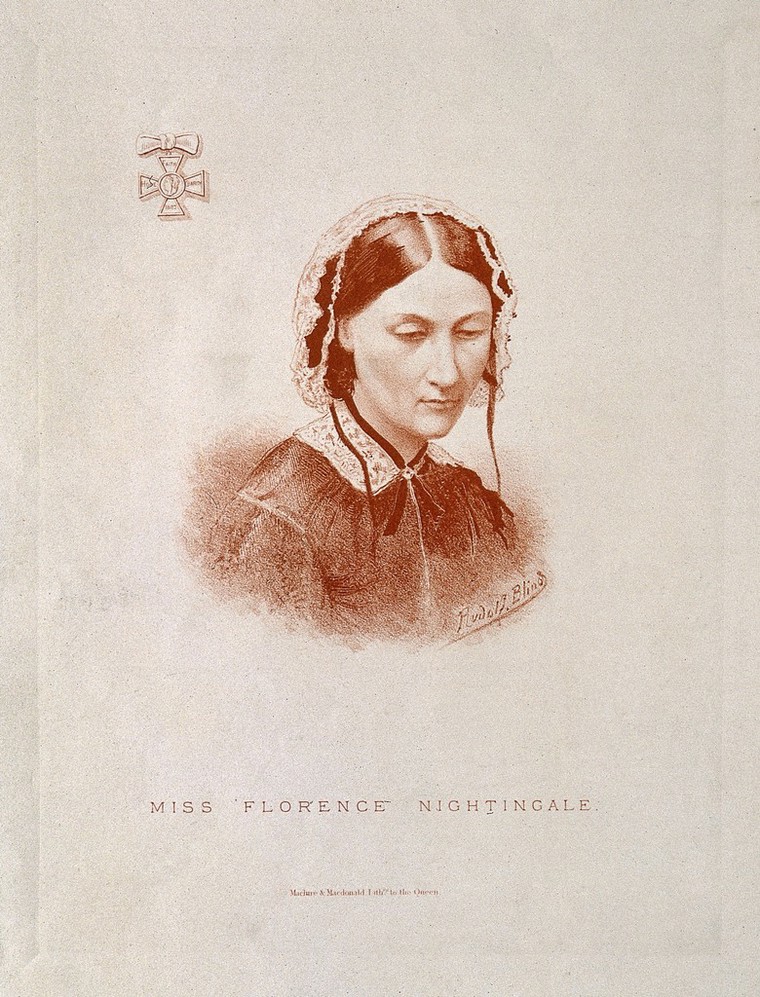
It was at this critical moment in history that Florence Nightingale appeared
She was not merely the “Lady with the Lamp.” She was a sharp, intellectual, and reformer who dared to think systematically about the medical system. Born in 1820 and educated in mathematics and statistics, she analysed data at a time when women were rarely allowed a voice in science. Florence was not interested in symptoms alone; she sought causes. And one of the central causes she identified was the absence of a life-supporting environment.
“Second Only to Fresh Air”: The Biology of Sunlight in Notes on Nursing
In her manifesto Notes on Nursing (1860), Nightingale wrote a sentence that still deserves to be displayed in medical schools and architectural studios:
“Second only to fresh air is light… and not only light but direct sunlight.” This statement was radical. In a world accustomed to hospital half-darkness, Nightingale distinguished artificial light from natural light. She intuitively understood what science confirms today: that sunlight carries biological information that cannot be replaced by a candle flame or a gas lamp.
She even suggested that sunlight had the power to “purify” both air and patients’ bodies. Today we know she was right. Ultraviolet radiation possesses bactericidal properties, and visible light stimulates nitric oxide release in the skin, supporting cardiovascular function. Yet she expressed this insight in simpler but equally accurate terms: light fosters vitality, darkness weakens it.
Architecture of Healing: The Nightingale Pavilion
Florence did not stop at theory. As a visionary of hospital design, she developed the concept of the “Nightingale Ward,” which became a global model for decades. Her architectural reforms were a manifesto for light:
- Buildings had to be narrow enough for daylight from windows on both sides to reach the centre of the ward.
- Windows were central therapeutic tools, extending high toward the ceiling to eliminate “dead zones” of shadow.
- Beds were positioned to ensure every patient could see the sky.
Nightingale observed that patients behaved almost like plants, instinctively turning toward sunlight. “The sick almost always place themselves facing the light,” she wrote. She recognised this heliotropic impulse long before biology explained it.
“Nervous Hunger” and the Circadian Rhythm
One of the most fascinating aspects of her work was her observation of patients’ psychological states. Nightingale described what she called a kind of “nervous hunger” – a profound restlessness and deterioration that occurred in dark wards.
She noticed that in poorly lit rooms, patients became disoriented, depressed, and less willing to fight for recovery. Today, chronobiology explains this clearly. Light reaching the retina regulates the pineal gland and the secretion of melatonin and serotonin. Without light cues, the brain loses temporal orientation.
Nightingale did not use the language of circadian rhythms, but she understood their clinical reality. She insisted that variation in light intensity throughout the day was essential for recovery – an early intuition of what we now call circadian therapy.
The Rose Diagram: Data That Could Not Be Ignored
During the Crimean War, Nightingale created her famous polar area diagrams – now known as “Nightingale’s Rose.” These visualisations revealed a shocking truth: most soldiers were not dying from battle wounds, but from infectious diseases aggravated by poor sanitation, stagnant air, and dark hospital conditions.
Armed with statistical evidence, she pushed through reforms that reduced mortality in field hospitals from approximately 42% to 2%.
It may have been the first time in history that mathematics proved architecture and sunlight to be as vital as surgical intervention.
The Biological Cost of Progress
Nightingale was among the first to recognise that the price of industrial progress was biological. The “architecture of shadow” – narrow streets, tall walls, and smog – had severed entire populations from the natural rhythm of daylight.
Today, in the twenty-first century, we face a similar challenge on a global scale. We live in climate-controlled offices and apartments with glass that filters large portions of the infrared and ultraviolet spectrum. We experience rising rates of chronic diseases linked to circadian disruption and insufficient light exposure.
The problem has evolved, but its root remains strikingly similar.
A Bridge Between Eras
The history of light in medicine is not a straight line. It is a spiral – a return to knowledge once understood intuitively, then obscured by industrial smoke and an exclusive focus on pharmacology.
Florence Nightingale became the bridge between these eras.
She translated the ancient intuition of the Asclepieia into the language of statistics and evidence. Her legacy is not merely the professionalisation of nursing; it is the courage to recognise sunlight as a foundational element of healthcare.
She reminded us that light is not a luxury. It is a biological signal without which the body does not know how or when to heal.
Soon, we will move to the moment when sunlight entered laboratories and scientific experimentation. We will explore the story of Niels Finsen and the birth of modern phototherapy, the path that led to the first “light-based” Nobel Prize.
The story continues.
What’s Next in the Series?
In the upcoming articles, we will explore:
- Swiss sanatoria and heliotherapy protocols – including the famous “snow beds,”
- Niels Finsen, pioneer of scientific phototherapy and Nobel laureate,
- The Wolff brothers and the early medical intent behind tanning devices,
- The decline of heliotherapy after World War II – and why light was forgotten,
- Modern photobiology – how science is rediscovering the impact of light on circadian rhythms, immunity, cardiovascular health, and mental well-being.