Do We Need a New Language for Talking About UV? Insights After the “Biologic Effects of Light” Symposium in Germany
In June 2026, an international symposium dedicated to vitamin D and the biological effects of light took place in Homburg, Germany. Its second part, Biologic Effects of Light, was particularly interesting. During this session, scientists discussed UV radiation, dose, photoprotection, mortality, skin biology, and mechanisms of light action that go beyond vitamin D production alone.
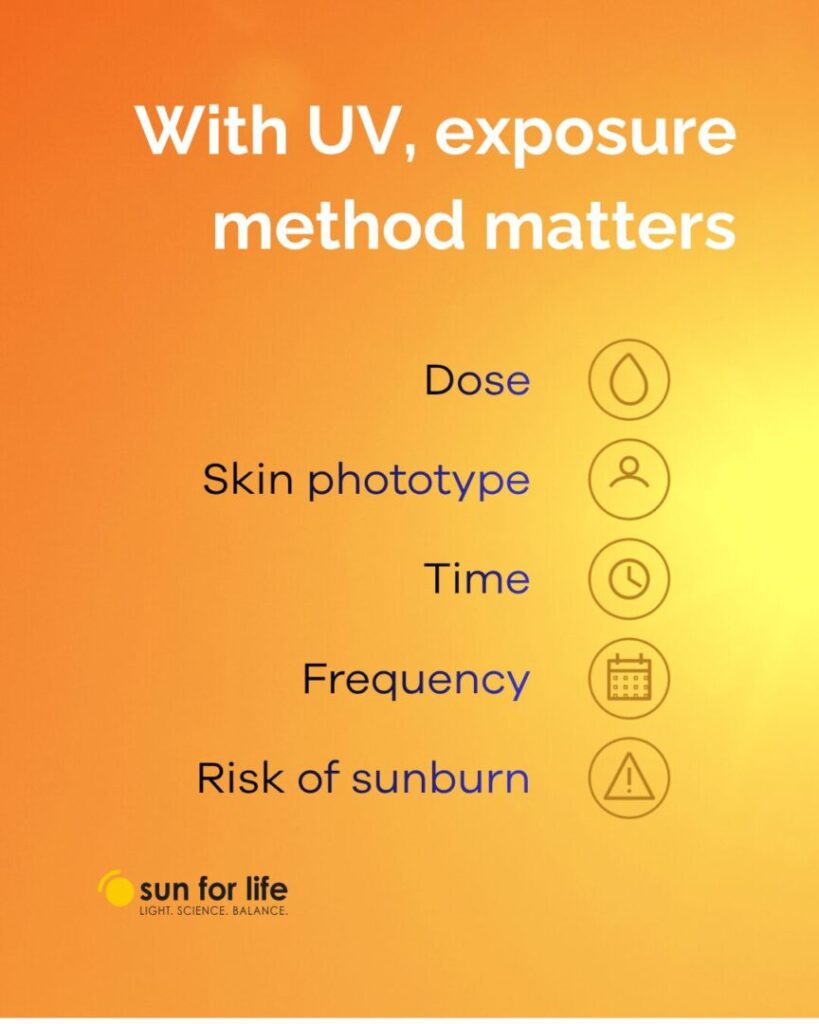
The article is an invitation to have a more precise conversation: about dose, skin phototype, exposure time, the risk of sunburn, and a responsible approach to light.
In June 2026, the Joint International Symposium took place in Homburg, Germany, bringing together two closely connected areas of science: the role of vitamin D in prevention and therapy, and the biological effects of light. The event was attended by researchers working in fields such as dermatology, photobiology, epidemiology, public health, vitamin D science, and the effects of optical radiation on the human body.
The first part of the symposium focused mainly on vitamin D: its metabolism, deficiency, supplementation, optimal status, and role in health and disease. From the perspective of Sun for Life, however, the second part of the event was particularly interesting: Biologic Effects of Light. This part showed that the contemporary conversation about light, UV, and human health is increasingly moving beyond the simple framework of “the sun harms” or “the sun helps”.
This part of the symposium addressed not only the risks associated with UV radiation, but also dose, wavelengths, photoprotection, biological effects of light, all-cause mortality, vitamin D-independent mechanisms, and different models of exposure: from natural sunlight to controlled UV sources.
It is becoming increasingly clear that the question should not be: is UV good or bad? A much more important question is: what dose, for whom, in what context, and with what biological effect?
UV and Health: A Relationship More Complex Than Skin Cancer Risk
For many years, communication about UV radiation has focused primarily on the risk of skin cancer. This risk is real and cannot be ignored. Excessive exposure, sunburn, and repeated skin damage remain important public health concerns.
At the same time, however, a growing number of scientists point out that complete avoidance of sunlight and UV may be an overly simplified message. During the symposium, it was repeatedly emphasised that public health policy regarding UV could take into account not only skin cancer risk, but also overall health outcomes, including all-cause mortality, cardiovascular disease, autoimmune disease, metabolic health, and potential vitamin D-independent mechanisms of light action.
One of the most striking examples was an analysis presented by Manfred Matzel on the so-called burden of disease. According to the ESA report, Matzel compared the average loss of life expectancy associated with skin cancer with the loss of life attributed to diseases potentially responsive to sunlight, such as cardiovascular disease, stroke, cancers, and autoimmune diseases.
In his analysis for Germany, skin cancer accounted for an average loss of about 27 days of life per person, while “sunlight-responsive” diseases were associated with a loss of more than six years of life.
This comparison is striking, but it requires careful interpretation. It does not mean that the risk of skin cancer can be ignored, or that every form of UV exposure is beneficial. Rather, it suggests that public communication about UV should not be based on only one type of risk. When we talk about human health, it is worth looking at the broader balance: the risk of sunburn and skin cancers on one side, but also the possible consequences of chronic sunlight avoidance on the other.
This is an important shift in perspective. It does not mean that UV is risk-free. Rather, it means that the conversation about UV could become more mature: less based on fear, and more grounded in biology, dose, skin type, behaviour, and context.
Not Only Skin: Light as a Biological Factor
One of the main conclusions from the second part of the symposium was that light and UV radiation affect the body far beyond vitamin D production alone.
Presentations on the biological effects of light pointed to possible links between UV and the immune system, hormonal system, nervous system, mood regulation, stress response, pigmentation, and body homeostasis. From this perspective, the skin is not merely a “barrier” that needs to be protected from the outside world. It is also an active biological organ that receives environmental signals and passes them on to the rest of the body.
This approach fits well with a broader shift in photobiology: moving from thinking about the sun solely as a source of vitamin D to understanding light as a complex environmental signal.
Is “Avoid the Sun” the Right Message?
One of the strongest themes of the symposium was the criticism of overly simple advice based on sun avoidance. Of course, no one questions the need to prevent sunburn or to protect particularly vulnerable individuals, such as patients with a history of skin cancer, immunosuppressed individuals, or people taking photosensitising medications.
The problem is that the message “avoid UV” may fail to distinguish harmful overexposure from sensible, controlled exposure. And that distinction is crucial.
In practice, what matters is not only the mere fact of contact with UV, but also:
- dose,
- wavelength,
- exposure time,
- the surface area of exposed skin,
- skin phototype,
- previous adaptation,
- age,
- season,
- latitude,
- exposure-related behaviours,
- risk of sunburn.
For this reason, the future of communication about the sun and UV will probably not be based on simply frightening people about sunlight, but on more precise education: how to avoid sunburn and excessive exposure, while at the same time not creating the belief that every contact with sunlight is undesirable.
Controlled UV Exposure and Risk Behaviour
Because the second part of the symposium focused broadly on UV radiation and its biological effects, the topic of tanning devices also appeared in the discussion. However, this was not a simple debate about whether sunbeds are “good” or “bad”. The more interesting question was whether all forms of UV exposure should be assessed in the same way: regardless of dose, user behaviour, sunburn risk, and the context of exposure.
The ESA report drew attention to an analysis by Pelle G. Lindqvist based on the large Swedish MISS cohort, which included around 29,000 women followed for up to 34 years. This analysis distinguished between sunbed use without indicators of risky behaviour and sunbed use combined with signs of excessive, intermittent sun exposure.
This distinction is important for the broader debate about UV. According to the ESA report, sunbed use without such indicators was not associated with an increased incidence of melanoma compared with non-use. By contrast, among sunbed users who showed indicators of excessive exposure, melanoma risk was higher.
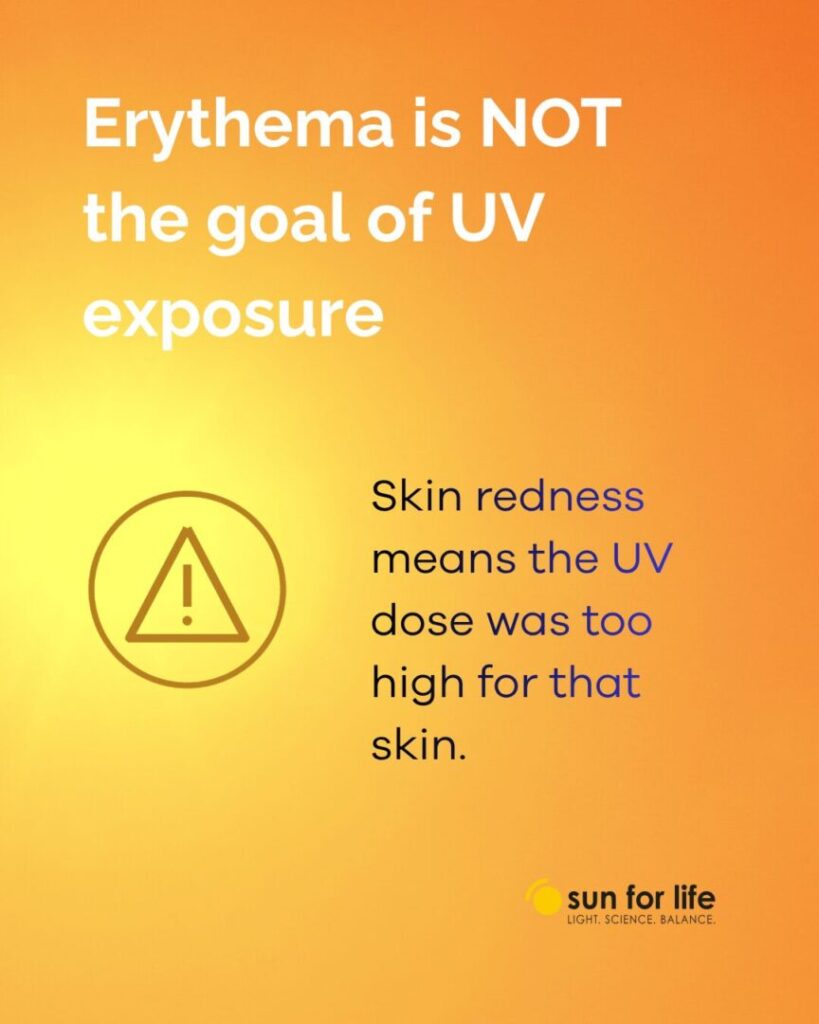
This does not mean that sunbed exposure can be considered risk-free. Rather, it shows that in UV research, it is becoming increasingly important to distinguish between exposure itself and the way in which it occurs. Controlled, non-burning exposure should be analysed differently from repeated behaviours that lead to excessive UV doses and skin damage.
From the perspective of health education, the key conclusion is this: in the conversation about UV, dose, frequency, skin phototype, sunburn risk, individual contraindications, and human behaviour all matter. These are precisely the elements that could become the focus of more precise public communication.
Dose, Skin Surface Area and Wavelength
Another interesting theme in the second part of the symposium was the discussion of UV dose, exposure biomarkers, and differences between natural sunlight and tanning devices.
One presentation compared exposure from commercial tanning beds with natural exposure to summer daylight. The conclusion was more complex than a simple statement that one UV source is “stronger” than the other. What matters is not only the radiation dose, but also the surface area of skin being exposed. In a sunbed, a much larger part of the body is often exposed than during typical time spent in the sun.
Other presentations focused on the wavelengths associated with vitamin D production and DNA changes. This is an important direction for research because it shows that not all UV acts in the same way. The biological effect depends on wavelength, dose, skin, and the model of exposure.
The Future of Photoprotection: Not Only SPF
The future of sun protection was also discussed during the symposium. The “Sun Care 2040” theme suggested that campaigns focused solely on sun avoidance have not solved the problem of sunburn. Perhaps a different approach is needed: one that recognises the potential relevance of non-burning exposure, while at the same time preventing sunburn more effectively.
There was also a discussion around very high SPF products. On the one hand, it was suggested that very high SPF values may provide diminishing additional filtration benefits while requiring a higher load of chemical UV filters. On the other hand, it was emphasised that DNA damage can occur below the erythema threshold, and that for particularly vulnerable individuals — for example, immunosuppressed people or those with a history of skin cancer — high protection may be justified.
This shows that photoprotection, too, should be more individualised. A person with very fair skin and a history of cancerous lesions needs a different level of protection than a healthy person with darker skin who spends only a short time outdoors, and different again from someone who works for many hours in full sun.
What Does This Mean for UV Education?
The Homburg symposium shows that education about sunlight and UV needs greater precision. It is not enough to say only: “avoid the sun”. It is also not enough to say: “more sun”. Both messages are too simple.
The sun education could take into account both the risks of excessive exposure and the fact that light is a biologically active environmental factor. It could help people understand the difference between short and long exposure, gradual and sudden exposure, non-burning exposure and exposure that leads to erythema, natural and artificial exposure, partial exposure and whole-body exposure, accidental and controlled exposure.
In this context, tanning devices appear as part of a broader conversation about UV, dose, and behaviour.
Humans evolved in contact with light. Our skin, eyes, biological clock, hormonal system, and immune system respond to light signals. Modern science is only beginning to fully understand how many of these mechanisms go beyond vitamin D alone.
That is why the future of sun education could be based on the question: how can we use light wisely?
The Bigger Picture
The Homburg symposium reflects an increasingly visible trend in light science: moving away from a one-dimensional narrative and towards a more complex view of the human body as biologically connected with light.
Vitamin D remains an important part of this story, but it is not the whole story. Sunlight and UV influence the body through many pathways: from the skin and immune system, through the cardiovascular system, to circadian rhythms and hormonal regulation.
Perhaps the most important conclusion from the Biologic Effects of Light part of the symposium is that we need a new language for talking about UV. A language that does not encourage excessive exposure, but also does not reduce sunlight solely to a threat.
We need a language of balance, biology, and responsibility.
Because today, the question is no longer only: how should we protect ourselves from the sun?
Increasingly, it is also: how can we live with light in a way that truly supports health?
Sources:
- Joint International Symposium: Vitamin D in Prevention and Therapy and Biologic Effects of Light, Homburg/Saar, Germany, June 10–12, 2026. Official Programme, Universitätsklinikum des Saarlandes.
- European Sunlight Association. Report: Joint International Symposia Vitamin D in Prevention and Therapy and Biologic Effects of Light, 10–12 June 2026, Homburg/Saar, Germany.
Read More

Next-Generation Solariums: LED, Skin Sensors and a New Experience of Light
Indoor tanning technology is evolving beyond session time alone. Discover how full-body LED systems, skin sensors, personalised programmes and red light are changing the way modern solariums manage light, comfort and individual exposure.

Nutrients that Help Protect the Skin from UV Damage
Ultraviolet (UV) radiation contributes to extrinsic skin aging called photoaging. Research over the past several decades has revealed that a higher intake of several specific
Oxidative Stress, ROS and Light
Oxidative stress does not arise suddenly or as the result of a single factor. It is a process linked to the everyday functioning of cells, mitochondrial activity, and the balance between physiological load and recovery. In this article, we take an accessible look at how these mechanisms work and why it is worth viewing them within a broader context.

The story of our skin #4 – Folate, sunlight and evolution
Human skin colour is not just a matter of aesthetics – it is a record of thousands of years of evolution, in which sunlight and nutrients such as folate shaped our health and survival.