Next-Generation Solariums: LED, Skin Sensors and a New Experience of Light
The indoor tanning industry is entering a new technological chapter. Modern solariums are no longer only about achieving a tan - they are becoming advanced light systems that combine LED technology, controlled UVA and UVB exposure, red light, skin sensors, personalised programs and relaxation features.
This evolution does not replace the long-standing principle of responsible, standards-based tanning. It builds on it. For many years, the professional tanning sector has been moving toward controlled exposure designed to avoid burning, with greater attention to skin phototype, dose management, eye protection, equipment standards and staff training. Today’s new technologies make this approach even more precise. The next-generation devices show how tanning can move from choosing minutes to designing a more individual, conscious and comfortable light experience.
For some people, the word solarium may still bring to mind the tanning experience associated with the early 2000s: rows of fluorescent lamps, high heat and a session defined mainly by the number of minutes.
More than two decades later, the professional indoor tanning industry has continued to evolve. Conventional lamp-based systems remain a well-established part of the market, supported by exposure schedules, high technical & user comfort standards, skin phototype assessment and professional operating procedures.
At the same time, the latest generation of devices is expanding the possibilities of light management. Advanced solariums can now combine UVA and UVB with LED technology, red light, skin measurement, personalised programmes, digital controls and advanced relaxation features.
The change is therefore not a move from uncontrolled to controlled tanning, nor is it simply about replacing one type of light source with another. It represents the next stage in the development of an already structured professional system: towards greater precision, flexibility and personalisation.
The conversation is therefore moving beyond the traditional question:
How many minutes?
It increasingly includes questions such as:
What type of light is being used? What is the purpose of the session? How much exposure is appropriate for this person today?
What is changing: the level of precision
The most important technological change is not simply the replacement of conventional lamps with LEDs. It is the growing ability to control the light more precisely.
New systems can combine different light spectra, offer programmes designed around different goals and, in some cases, add information from a skin measurement. This allows a session to be planned using more than exposure time alone.
Modern devices may combine UVA and UVB, red light, full or partial LED technology, sensor-controlled programmes, digital management, cooling, sound and other comfort features.
The central question is no longer only how long the session lasts. It is increasingly about:
What kind of light is being used, in what proportion, for what purpose and for which skin?
From traditional lamps to LED technology
For decades, tanning devices have relied mainly on fluorescent tubes and high-pressure lamps. These systems emit UVA and UVB in proportions determined by the construction and configuration of the equipment.
UVA is primarily associated with the darkening of existing melanin. UVB contributes to the formation of new pigment and is also biologically relevant to vitamin D synthesis in the skin.
LED technology introduces a different method of generating and distributing light. Selected wavelength ranges can be produced by separate LED systems and combined in different proportions. Depending on the device, this may allow manufacturers to manage UVA, UVB, red light or other visible-light ranges more individually.
This does not mean that LED makes UV biologically neutral. UVA and UVB remain ultraviolet radiation and continue to require responsible use. The technological difference lies in the possibility of controlling the spectrum, its distribution across the body and the overall character of the session with greater precision.
LED technology may also offer operational advantages. Manufacturers point to lower energy consumption, longer source life, more consistent performance and reduced heat generation. The exact benefits depend on the design of the device, and energy-saving figures should be understood as manufacturer specifications rather than universal values.
The wider goal is therefore not simply stronger or faster tanning. It is better control of light.
A technology developed in stages
The transition to LED did not happen overnight. Manufacturers first introduced LEDs for visible red or Beauty Light. LED systems were later used in selected tanning zones, such as the face, décolleté, shoulders or neck. The next stage has been the development of devices in which LEDs are responsible for a larger part, or even the whole, of the UVA and UVB exposure.
This gradual development can be seen across several manufacturers. KBL/megaSun progressed from LED applications in selected areas to the full-body LED concept of K11 Air. Ergoline introduced full-body UV LED technology with Elements and later expanded the concept in the premium Prestige Edge Dynamic LED. Luxura’s Jewel EQ45 represents a hybrid route, combining conventional lamp technology with advanced LED systems for selected areas and light ranges.
The solutions are not identical, but they point in the same direction: more precise spectrum control, improved energy efficiency, digital monitoring and a session shaped by more than time alone.
One market trend, three technological routes
KBL/megaSun: towards a full-body LED system
KBL developed its LED technologies in stages. Earlier systems introduced LEDs into selected parts of the device and for specific light functions. The K9S with SunSphere Pro, for example, was presented by the manufacturer as the first use of UVB LEDs in the face and décolleté area of a solarium, replacing conventional T5 lamps in that zone.
K11 Air takes the concept further. KBL describes it as the first solarium relying exclusively on LEDs, using separately controllable LED systems for UVA, UVB and red light across the body. According to the manufacturer, this allows the individual spectra to be controlled more variably than in conventional lamp-based systems.
The device also allows the user to choose different light profiles, intensities and atmospheres. Its programmes are organised into Sensitive, Medium and Intensive categories, with additional choices inspired by different times of day.
The important change for the client is not the number of LEDs inside the machine. It is the idea that the session can be shaped using different light components instead of one fixed lamp configuration.
The K11 Air Select develops this idea further with four sensor-controlled UV programmes, two UV-free red-light modes and the SunSense skin sensor. It is an example of a device moving from a standard tanning cycle towards a more programmable light experience.
Ergoline: full LED combined with comfort and wellbeing
Ergoline provides another clear example of how LED technology is developing in stages.
Elements by Ergoline brought full-body UVA and UVB LED technology into the company’s portfolio. Its Diamond Reflector is designed to distribute UV light precisely across the face and body, while different programmes allow the character of the session to be adjusted.
According to Ergoline, the LED system used in Elements may reduce power consumption by up to 70 per cent and has a stated service life of more than 20,000 hours. These are manufacturer specifications, but they illustrate another important aspect of the transition: LED development is connected not only with spectrum control, but also with energy efficiency and durability.
Elements also combines UV LED technology with red Beauty Light and green Nature Light in a system called Synergy Light. Sound, meditation programmes, fragrances, cooling and ventilation form part of the wider experience.
The newer Prestige Edge Dynamic LED expands this concept within Ergoline’s premium range. Its Dynamic LED Performance system combines UVA and UVB with homogeneous light distribution and an engineered cooling system intended to support LED performance and lifespan.
Ergoline also introduces different combinations of visible light. Synergy Technology combines red Beauty Light with green Nature Light, while Fusion Technology combines red Beauty Light with blue Activating Light.
What is especially relevant to the wider market change is the way Ergoline designs the whole session. Adjustable temperature, three-zone ventilation, Aqua Fresh & Aroma, cinematic sound, Bluetooth and guided meditation are included in a concept the company describes as “transforming tanning to wellness”.
Luxura: a hybrid route towards the same future
Luxura’s Jewel EQ45 represents another technological route.
Rather than being a fully LED solarium, it combines established lamp technology with an advanced LED architecture. Its full-LED facial tanner uses UVA PowerLEDs, UVB PowerLEDs, red LEDs and yellow LED light. Additional LED systems target the shoulders and neck, areas that can be more difficult to reach evenly using a conventional configuration.
The Jewel also uses Luxura’s IP Control system. According to the manufacturer, this system manages the power supplied to both lamps and LEDs, compensates for changes in output over their operating life and monitors performance within the applicable 0.3 W/m² requirements.
The device illustrates how technology increasingly extends beyond the light source itself. Smart Cooling, mist and fragrance through the Sense system, SoundAround, SmartVoice and online equipment management through the MyLuxura portal are integrated into the same concept.
Luxura reports energy savings of up to 50 per cent compared with its Vegaz range. Again, this is a manufacturer comparison relating to specific products, not a general figure for all hybrid tanning devices.
KBL, Ergoline and Luxura are not offering identical solutions. However, together they show the same wider movement: from one fixed type of exposure towards more controllable spectra, different programmes, greater energy efficiency and a more complete user experience.
When the device measures the skin
One of the most distinctive functions of K11 Air Select is SunSense: an integrated system designed to add an objective skin measurement to the process of selecting the UV programme.
The technology was developed through cooperation between KBL and Delfin Technologies, a company specialising in instruments for skin measurement. Delfin’s SkinColorCatch technology measures skin colour directly inside the solarium and provides data used by the SunSense system to individualise the UV dose. The aim of SunSense was to add real-time information from the person’s skin to the process.
KBL states that the sensor provides data used to calculate the minimal erythemal dose and adjust the selected programme. In practical terms, the system is designed to move the decision from estimation alone towards a combination of skin assessment and direct measurement.
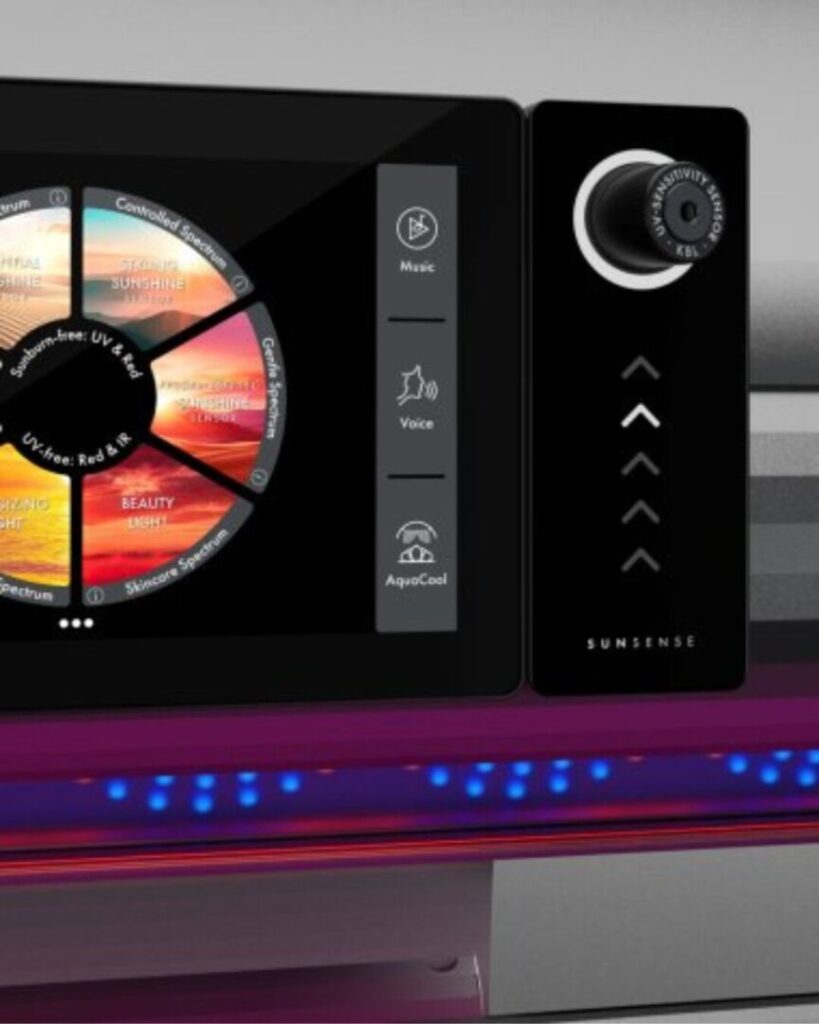
An important part of the development was making the technology simple enough for everyday salon use. Instead of requiring a separate measuring device or additional procedure, Delfin and KBL integrated a single-point measurement into the solarium itself. The sensor was also adapted to the practical conditions of a tanning salon, including the use of a customised glass interface intended to protect it without affecting measurement accuracy.
Traditionally, session time has been selected using skin phototype, tanning history, staff knowledge and information provided by the client. These elements remain essential. Previous sun exposure, photosensitising medicines, cosmetics and the current condition of the skin may all influence the way a person responds to UV.
SunSense does not replace these professional procedures. A sensor cannot identify every contraindication, assess medication use or replace protective eyewear, appropriate intervals between sessions and trained salon staff.
Its value lies in adding objective data to an already established process. It illustrates how next-generation tanning technology is moving from general exposure tables towards more measurable and individual dose management.
The significance of this development goes beyond one device. Skin measurement technologies have existed in the tanning sector for years (Ergoline’s Spectra Sun Angel model from 2020), but their everyday use has often been limited by additional equipment and complex procedures. By integrating the measurement directly into the session, KBL and Delfin are attempting to make it a practical part of the normal client experience.
Picture source: KBL website
Not every programme has the same goal
Another important change is the move away from the assumption that every session must have the same purpose.
Some clients want a more visible tanning effect. Others may want gradual preparation before a sunny holiday, a softer glow, a programme with a different UVA-UVB balance or an experience with greater emphasis on red light and relaxation.
K11 Air Select illustrates this shift through four sensor-controlled UV programmes: Dynamic Sunshine, Essential Sunshine, Styling Sunshine and monAmie Sunshine. The manufacturer presents these as different “light worlds”, including gentle preparation, a programme with a greater UVB focus, a complexion-oriented programme and an option with additional red light. It also offers Energising Light and Beauty Light as UV-free red-light modes.
This means that session length and pigmentation goal do not always have to be treated as the same thing.
A person who wants to remain in the device for a more relaxing experience does not necessarily need the strongest tanning programme. Depending on the equipment and programme configuration, a session may place more emphasis on red light, comfort or even a UV-free mode.
A longer session should therefore not automatically be interpreted as “more UV”. The more relevant question is:
What kind of light is being used, in what proportion and for what purpose?
For Sun for Life, this is the most interesting part of the change. The conversation about indoor tanning becomes less about intensity and more about biological context, dose, purpose and individual response.
Red light: tanning, skincare or something different?
Red light is increasingly visible in modern tanning devices, but it is important to distinguish it from UV.
Red light does not create a conventional tan because it does not stimulate melanogenesis in the same way as UVA and UVB. It is studied separately in the field of photobiomodulation, the influence of specific wavelengths and doses of light on cellular processes.
Research into photobiomodulation includes potential applications relating to skin condition, repair processes, inflammation and visible signs of ageing. However, the biological response depends on many variables, including wavelength, dose, irradiance, exposure time, device design and individual response.
This is why red light should not be reduced to a simple statement such as “it rejuvenates the skin”. A red glow inside a device does not automatically mean that it delivers the same parameters as those used in clinical studies.
In the context of tanning equipment, red light can be understood as part of a developing light care category: an additional light option that may be combined with UV or used in a UV-free programme, depending on the device.
From a tanning device to a sensory environment
Another noticeable difference between older and newer equipment is the growing focus on the way the session feels.
Cooling, airflow, mist, fragrance, sound, voice guidance and adjustable temperature are no longer treated only as optional extras. They are increasingly incorporated into the design of the whole experience.
Ergoline includes guided meditation, cinematic sound, aroma and climate control in its current full-LED concepts. Luxura combines music, voice guidance, cooling, mist and fragrance. KBL’s K11 Air family offers different light atmospheres, airflow, cooling and sound.
CALMO and healing frequencies: sound as part of the relaxation experience
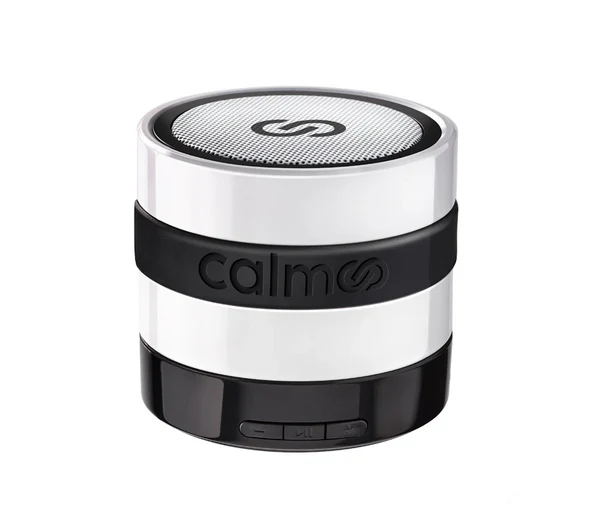
In this context, the CALMO feature used by KBL is an interesting element. It is based on sound and so-called healing frequencies. Such a system does not directly affect the tanning process. Its role is different: to create a calmer, more sensory and more relaxing experience during the session. The client is not only coming in for “a few minutes of UV”. They may expect a brief pause in the day, a moment of sensory reset and an experience that feels pleasant for both body and mind.
CALMO uses sound and frequencies associated with meditation music, sound bath practices and relaxation environments. Its purpose is, in fact, to support a sense of calm, comfort and deeper rest during the session. This should be understood as an experience and relaxation feature, not as a medical intervention.
Together, these elements show how the solarium is evolving from a machine that simply emits UV into a more carefully designed sensory environment.
What technology does not change
Technology may change, but the basic rules of responsible indoor tanning remain essential.
These include assessing skin phototype, checking contraindications and photosensitising medicines, using protective eyewear, avoiding burning, maintaining appropriate intervals between sessions, observing applicable age restrictions, servicing the equipment and ensuring that staff are properly trained.
In Europe, a key technical reference is the maximum erythemally weighted UV irradiance of 0.3 W/m². The value is intended to limit the erythema-producing potential of the device and reduce the risk of acute burning when exposure schedules are correctly applied.
The 0.3 W/m² requirement controls the output of the equipment. It does not make UV biologically neutral or remove the importance of cumulative exposure, skin response or correct use.
LED spectrum control, skin sensors and personalised programmes should therefore be seen as tools supporting professional standards, not as substitutes for them.
More than twenty years later
The professional indoor tanning industry has not stood still. The image of solariums that still shapes some people’s perception belongs to an earlier technological era.
Today’s most advanced devices can manage light spectra more precisely, add information from skin measurement, offer programmes for different goals and create a more comfortable and relaxing environment. KBL, Ergoline and Luxura demonstrate different versions of the same wider change.
This does not remove the need for responsible UV use. It gives professional salons new tools for making exposure more measurable, more controllable and more individual.
The future of indoor tanning is therefore not simply about stronger lamps or faster results. The conversation is becoming less about intensity and more about biological context, dose, purpose and individual response.
It is a shift from selling minutes to designing a light experience.
Sources/References:
- megaSun / KBL. K11 Air.
- megaSun / KBL. K11 Air Select.
- megaSun / KBL. K9S.
- Delfin Technologies. From Estimation to Precision: How KBL Improved Tanning Safety with Delfin. Case study, (26 May 2026).
- Ergoline. Elements by Ergoline.
- Ergoline. Prestige Edge Dynamic LED.
- Ergoline’s Spectra Sun Angel.
- VDL Hapro/Luxura. Jewel EQ45.
- Hernández-Bule M.L. et al. Unlocking the Power of Light on the Skin: A Comprehensive Review on Photobiomodulation (2024)
- NCCIH. Music and Health: What You Need To Know.
- Saskovets M. et al. Effects of Sound Interventions on the Mental Stress Response in Adults. (2025)
Explore More

What’s Your Skin Phototype? The Fitzpatrick Scale. Discover your skin phototype and how your skin responds to UV radiation.
Now, during the season of sun, sea, and suntans, it’s a great time to get to know your skin type. Your skin phototype determines how long you can stay in the sun, what kind of protection you need, and… how your body will react to those first rays of light.

How to prepare your skin for tanning?
Before soaking up those first rays of sunshine, it’s worth asking yourself: is my skin ready for the sun? Proper preparation is not just about aesthetics, it’s primarily about health and comfort, also mental.

More sun, longer life? UK study sheds new light on the impact of UV exposure on mortality
For years, we’ve been warned about the sun and tanning beds due to the risk of skin cancer and premature ageing. Meanwhile, a study of nearly 400,000 people published in Health & Place (2024) suggests that sun exposure may actually support longevity.

How to use a tanning bed safely? 4 steps to keep in mind
Tanning in a sunbed can be enjoyable and safe—if you know what to look for. Discover 4 simple steps to help you achieve a healthy tan and choose a salon that meets key safety standards. Smart tanning means better well-being and peace of mind.